If this is your first visit, welcome to my blog of memories and observations. If you wish to be notified of new posts, enter an e-mail address above, and click on "Submit." As we move through a seventh year of this venture, I thank all who have made regular visits, as well as fellow bloggers who have found Stomp Off worth linking to. Doing this sort of thing is time-consuming, but I try to post fresh material at least once a week—let me know what you think. There is a Commentary option at the end of each post and a Guest Book can be reached by scrolling down and clicking on the quill image. I welcome your observations, reaction and/or suggestions in either spot—or both. As for blog content, the most current posts are on the home page, starting at the top. Earlier items are listed by month, year and title in the archive index. To zero in on a particular key word or subject, use the search option that is located directly beneath the blog's masthead. Most images can be enlarged with a mouse click, and there are links to some of my favorite blogs, etc.Since visitors have come from 150 countries, a translator with numerous languages is located below. You can at any time revert to English with a click at the top left of this page:
You may not be familiar with Sam Wooding or his music, but he was an important part of jazz history, as you will realize if you listen to his recollections. This is the second of a five-part interview Sam and I did for the Smithsonian during April of 1975. In Part I, he reminisced about about his childhood, growing up in Philadelphia and spending time in Atlantic City, a place where many pioneers of black American music worked at the beginning of the 20th century.
December 3, 1924 advertisement. Sam Wooding's
band replaced Fletcher Henderson at the Alabam.
Here Sam picks up the story at the end of 1915—when he had left his family to go on his own as a pianist in Atlantic City—and. recounts his Army experience as a band musician, playing baritone and alto horn under Bill Vodery's leadership in New York and France. Returning to his hometown, Philadelphia, he has his first experience as a band leader, goes back to Atlantic City, "inherits" a cabaret in Detroit, and eventually takes a six-piece band into Barron Wilkins' cabaret in Harlem. Sam also gives us a fascinating back room glimpse of Harlem's club scene, weaving into this part of his recollections such colleagues as Ethel Waters, Bricktop, Lucky Roberts, James P. Johnson, Sidney Bechet, Charlie Johnson, Eubie Blake and Frankie "Half Pint" Jaxon. It all takes us up to 1923, when Sam brought his band to the new Nest Club and had not an inkling of a near future offer that would take him back to Europe, give his career a new, historic twist, and forever change his life.
Sam Wooding on a visit to my
apartment in November, 1982.
You may not be familiar with Sam Wooding or his music, but he was an important part of jazz history, as you will realize if you listen to his recollections. This is the first of a five-part interview Sam and I did for the Smithsonian during April of 1975. Here, he talks about his childhood, growing up in Philadelphia and spending time in Atlantic City, where many pioneers of black American music worked at the beginning of the 20th century.
As his account continues, you will hear Sam talk about Harlem, which became his stepping stone to a whole new world: Europe. In fact, Sam Wooding spent many years working in other countries, which is why his name is not as familiar to American jazz followers as it ought to have been.
Eubie Blake (here with his partner, Noble Sissle,
was an early influence on Sam.
Born June 17, 1895, Sam was approaching his 80th birthday when we sat down in my living room to make these tapes. As you will probably notice, he was very relaxed, for we had become friends a few years earlier, so he and his wife were no strangers to my apartment. This was also not the first time we had come together for an interview. A few years earlier, we did a rather unusual one-hour TV special wherein we conversed casually over a meal on a Trenton studio set that was a remarkable recreation of Sam's actual Harlem apartment. Striving for authenticity (and unable to comfortably fit a crew and three full-sized TV cameras into the actual apartment, our set decorators worked from photos and borrowed objects. We even had a glimpse of the kitchen, from which Rae Harrison (Sam's trusty companion and, later, wife) popped back and forth, serving her fried chicken (actually ordered from Chicken Delight).
I never had a copy of that show on tape, but I hope that one exists, somewhere, because Sam and Rae were marvelous.
Studio recreation of Sam Wooding's Morningside Ave, apartment.
Teschemacher (glasses), Jimmy and
Dick McPartland, Bud and his brother,
the actor Arny Freeman, in Chicago,1923.
Bud Freeman, the dapper dan of the original Chicagoans, always had about him an air of sophistication. At various times in his life he had wanted to be a professional golfer, a tap dancer, drummer, and even a Shakespearian actor. He looked the part for all of these professions. It is said that Lester Young admired Bud's playing, which should surprise few people—Bud's inspiration was Frank Teschemacher, the enigmatic alumnus of the fabled Austin High School Gang. I don't recall why I decided to do a session under Bud's leadership, except that his extraordinary solo on a 1933 recording, The Eel, by Eddie Condon's band was still glued to the walls of my mind. Bud recorded it again under his own name in 1939. A couple of weeks after this quartet session, I asked Bud to come back for an Elmer Snowden date that put him up front with Roy Eldridge—I will post some of that here, later.
This was not a working group, although pianist Dave Frishberg had been gigging regularly with Bud for awhile. This turned out to be Dave's first commercial recording session—he moved on, as you probably know, to compose and record a slew of wonderfully witty songs like Blizzard of Lies, My Attorney Bernie, and Peel Me a Grape.
Meet You in San Juan, Bud Freeman's own composition, gives all four players a spotlight opportunity, which is something Haggart and Lamont were no strangers to. Bassist Bob Haggart was a founding member of Bob Crosby's highly successful 1935 band (remember Big Noise from Winnetka?) and drummer Don Lamont's eventful career took him way beyond being a driving force in Woody Herman's memorable "Four Brothers" band.
Here's another keyboard romp by Cliff Jackson. He was a stride pianist and first-class guy who had lived and participated in decades of extraordinary jazz development, making many recordings under someone else's leadership, including Dizzy Gillespie's. He and his devoted wife, the wonderful Maxine Sullivan, owned a house in the Bronx where Cliff would spend hours in his basement lab, experimenting with chemistry while she sometimes played a trombone. Not your average couple!
This is a track from the first of two sessions we did for my own company. This one kicked off the December 30, 1961 date. We had planned a single date, but the piano's baseboard broke, so we ended up doing a second session the following month.
If you wish to know more about the stride piano style that Cliff represented, may I suggest that you visit pianist Mike Lipskin's site. This link will take you directly to his page on Harlem Stride Piano.
Tired of their cat and mouse game, Bessie decided to appease her husband, Jack Gee, by making him the producer of her touring show. She knew that Jack wasn't fit for the job, but felt that her brother, Clarence, would guide him. Impressed by her box office success, T.O.B.A bigwig Sam Reevin gave Jack a $3,000 budget for Bessie's next show. Getting Jack involved in her business was supposed to cement the ever-widening cracks in their relationship, but it did just the opposite.
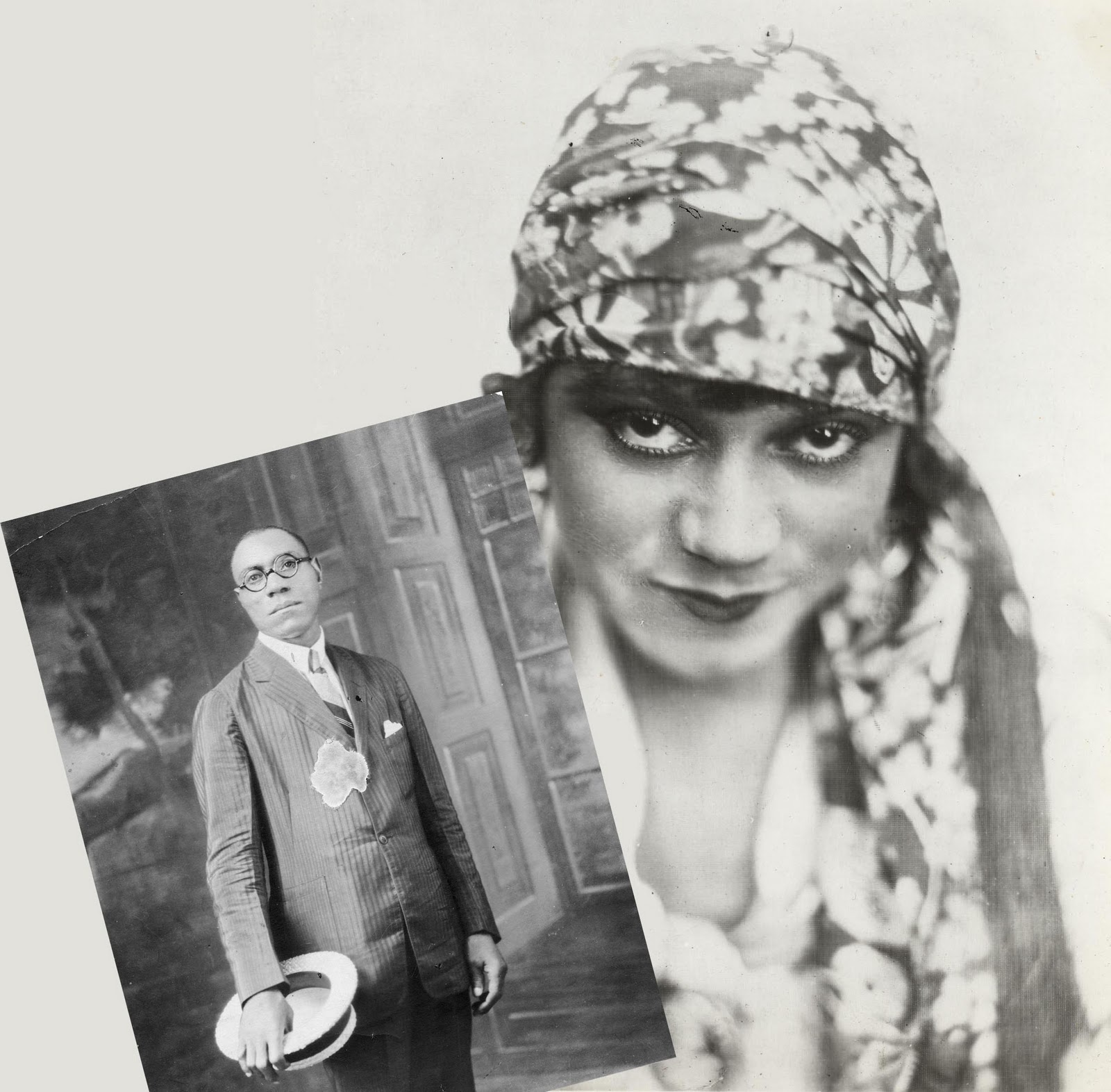
Jack threw together as cheap a production as possible for Bessie and decided to use the remainder of the money for personal gain—not to enrich himself financially, but to win the heart of Gertrude Saunders, a singer of striking looks and impressive past accomplishments. Ms. Saunders had starred successfully in the title role of Irvin C. Miller’s Red Hot Mama show during the 1926 season, and headed the cast of various subsequent editions, but her most successful shows had been Liza and the 1921 Sissle and Blake hit, Shuffle Along (which included Josephine Baker in the chorus line). The latter production would probably have secured Ms. Saunders’ stage future, but she made a fateful decision and allowed herself to be lured away from the original cast by an offer that never materialized. Gertrude Saunders’ bad move opened the door for the ultimate black beauty of the day, Florence Mills, who took over the role and was such a hit that she became the toast of Broadway. Ms. Mills career was cut short in November,1927, when she died at the age of 35, but the bright spotlight Gertrude Saunders so foolishly relinquished was never restored to her.
It is not known when Jack’s relationship with Ms. Saunders began, but Ruby thought it had gone on for some time before Jack produced her show, and that it accounted for some of his “hunting” trips. Gertrude Saunders was the antithesis of Bessie Smith, their personalities and looks contrasted sharply: Gertrude’s complexion was light, her hair long and soft, her disposition gentle. She was also slim and quite a bit younger than Bessie—a typical “Miller beauty.” The artistic gap that separated the two was equally wide: Gertrude Saunders relied more on her looks than on her voice, which had about it an unfortunate Florence Foster Jenkins quality and a range that could have made her the Yma Sumac of her day.
“She was the opposite of Bessie,” said Ruby, making no secret of her disdain. “She had light skin and long curly hair and a gorgeous figure, and she knew it. In fact, she thought her shit didn’t stink."
Jack strikes a Benny pose, Gertie mesmerizes.
In a 1971 interview, I asked Ms. Saunders if she had known that Bessie’s money went to back her show. “No,” she replied, emphatically, “but Jack could very well have put the money in my show without telling Bessie. Naturally he wouldn’t tell me if it was her money, he’d want to act like a big shot.” Which, of course, was exactly what he was doing.
“I don’t know how he thought he could get away with it,” said Ruby, “but he wasn’t never too bright and he didn’t know anything about show business. He should have known that you can’t keep something like that a secret, not with all them blabbermouths around. His show only lasted about five or six months, then it folded up. He couldn't get enough bookings. And,” she added acerbically, “his star wasn’t strong enough to hold it up.” After a short run in New York, Bessie’s own show, Steamboat Days, hit the road again—back to Detroit’s Koppin Theater, then on to the Globe in Cleveland, and, on March 11, a week at the Roosevelt in Cincinnati. That's where we pick up on Ruby's recollection.
And here is Ruby performing live over New York radio station WNYC, February 19, 1949. Her accompanists are trumpeter Gus Aiken, pianist Lannie Scott, Ellington veteran Wellman Braud on bass, and drummer Freddie Moore, who made his recording debut with King Oliver. Ruby complained to me that John Hammond insisted on her singing in Bessie's style, ignoring the fact that Bessie had moved herself into the Swing Era. Determined not to be regarded as a 1920s relic, she renders a couple of songs from Bessie's early repertoire and ends with a "modern" number—she had it all figured out.